Overview
QQube templates let you reuse a specific set of fields and their arrangement in a Dynamic List or PivotTable.
What a template saves
- The selected QQube fields.
- The field order.
- The basic report type and structure.
What a template does not save
QQube templates do not preserve workbook formatting or filters.
To preserve a fully formatted report with its filters and presentation intact, save and reopen the Excel workbook normally.
Why templates are important
Do not copy a QQube Dynamic List or PivotTable from one worksheet tab to another.
Excel does not create a new connection name when the structure is copied. This can cause QQube to confuse the copied object with the original when the workbook is refreshed.
Recommended method
Use a QQube template whenever you need to create another report with the same fields and structure. This allows QQube and Excel to create the report with its own valid connection.
QQube built-in templates
QQube provides built-in Dynamic List and PivotTable templates that can be used as starting points for Excel reporting.
Select a template
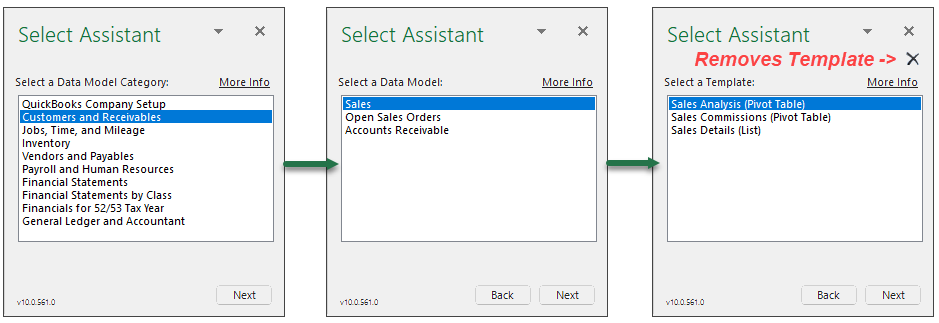
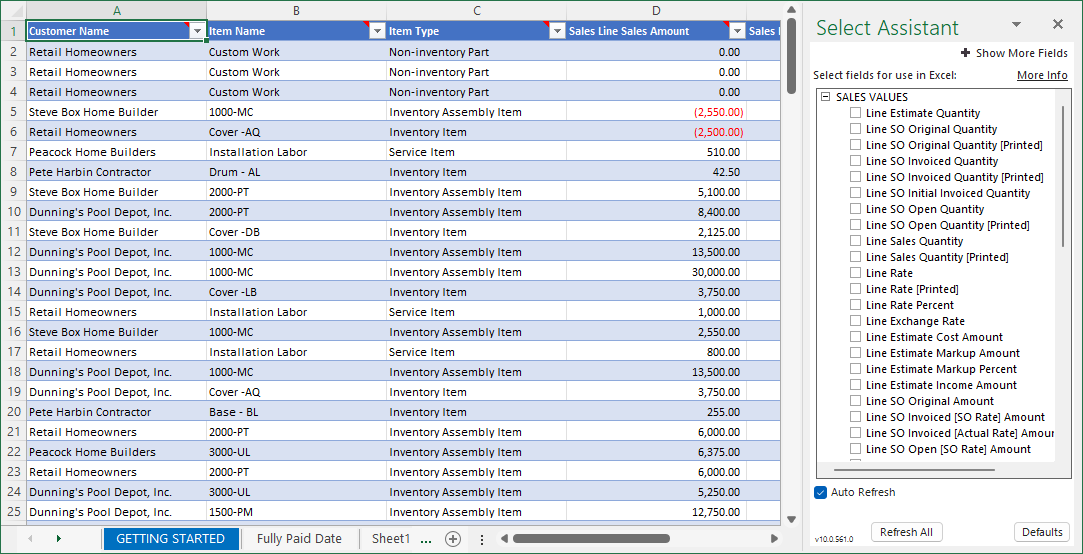
Sales Detail Template
This example opens a Dynamic List containing detailed sales records.
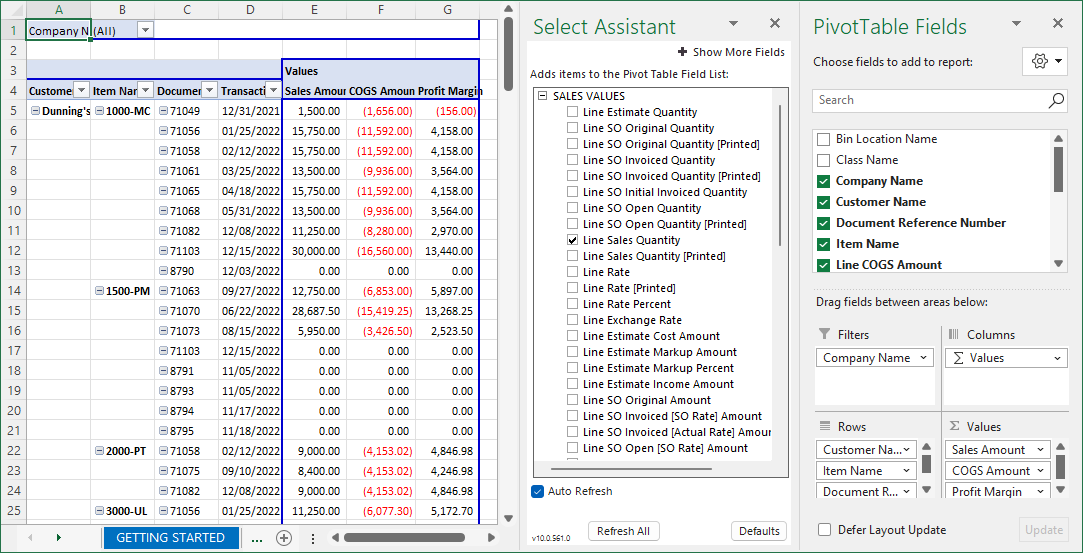
Sales Analytic Template
This example opens a PivotTable designed for sales analysis.
Create a custom template
The easiest method is to begin with an existing QQube template and then use the Select Assistant to add, remove, or reorder fields.
1. Modify an existing template
Open the closest matching QQube template and adjust the selected fields in the order required for the new report.

2. Select Save Template
Select the floppy-disk icon to save the current field configuration as a new template.

3. Name and save the template
Enter a descriptive personal name and select Save.

4. Reopen the QQube Excel Add-In
The custom template appears in the template list the next time the QQube Excel Add-In is opened.

Expected result
The custom template can be reused to create new QQube reports with the same fields and field order, while allowing Excel and QQube to create a valid connection for each report.
Was this article helpful?
That’s Great!
Thank you for your feedback
Sorry! We couldn't be helpful
Thank you for your feedback
Feedback sent
We appreciate your effort and will try to fix the article